






















Finding Faster
From a yoyo to the world's fastest wetsuits and beyond—click any milestone to explore ROKA's revolutionary journey.
The Start Line
This story starts at an IRONMAN 70.3 in Austin, Texas. The year: 2010.
Rob Canales had challenged a handful of his former All-American Stanford swim teammates to do the race. They’d graduated a decade earlier, and were admittedly not in peak condition.
Kurt Spenser bought the nicest wetsuit and bike he could afford to to try to give himself a leg up. He took the wetsuit for a test swim and was immediately uncomfortable. The shoulders were super tight. His stroke felt inhibited. He was getting hot. It was supposed to be the best swimming wetsuit on the market, advertised as super flexible and for swimmers. There was nothing better. He raced in it, and his shoulders fatigued and he overheated. It was not the best swim experience.

Of course, this was the topic of a lively post-race dinner discussion at Rob’s house.
Kurt and Rob had trained over decades to perfect their swim strokes. Absolute technical mastery. They had no choice. At 5’11’, 150, they were smaller than most swimmers at the highest level. They couldn’t get taller. Maybe a little stronger. To compete with the best in the world, they had obsess over their stroke technique. To find more power, more efficiency—any marginal gain they could.
They knew exactly what the perfect stroke should feel like, and asked themselves: Could a wetsuit feel like that? Even better: What if a wetsuit could enhance the mechanics of fast freestyle swimming? A full-body supersuit.
It would have to reduce drag, keeping the body in tight, straight alignment. As Kurt says, “You don’t want to be a wet noodle; you want to be a dry, streamlined spaghetti."
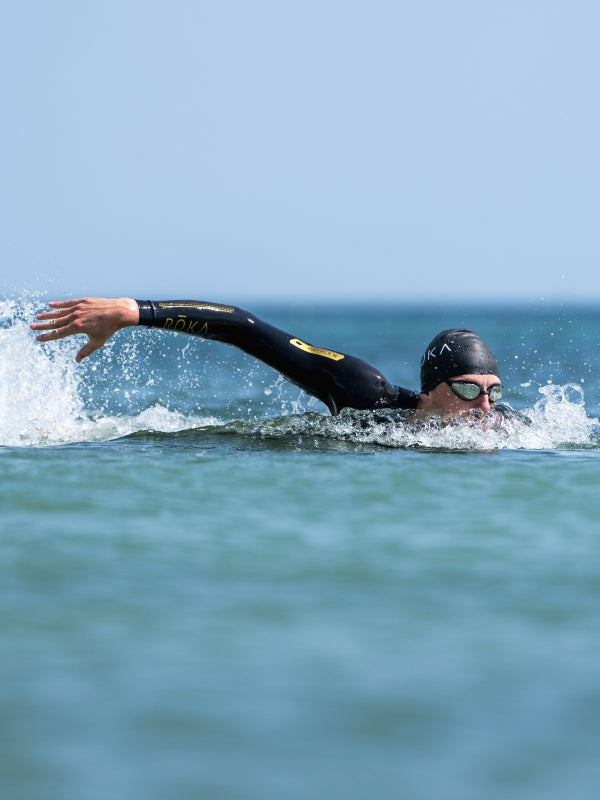
The majority of power in a freestyle swim stroke comes from anchoring your hand position, and vaulting your body past your hand. You set that anchor, then the rotation in your body creates the power in the pull phase of your stroke to vault past the anchor point.
So the perfect suit would put your body in the ideal position to swim freestyle--you want the feeling of swimming downhill. It would not only keep the body straight, but also aid rotation, and leverage the hips and rotation through the core to increase stroke power and speed. And it would feel awesome in the shoulders. And it wouldn’t be too hot.
Could they reduce neoprene thickness in some areas to keep it cooler? “Most people say they can’t float, but take a breath, and your lungs become two giant balloons--they can float your whole body. You don’t want a ton of buoyancy in the upper chest,” Kurt says.
Then he had his lightbulb moment.
“This design project that killed me, and that I considered a huge failure in college, became a huge gift.”
The Yoyo That Sort of Could
The plan: Design and manufacture an aluminum yoyo that could spin forever.
It was the perfect project for a student at Stanford’s renown d.school, combining innovation, creativity, and an unconventional approach, with materials science, manufacturing, and engineering.

But Kurt had put too much aluminum on the lateral edges of the yoyo. The design wasn’t the breakthrough he’d hoped it would be.
“It worked,” he says. “But it didn’t have the right feel. It took so long for the wheel to spin up because there was so much weight and inertia needed on the lateral edges of the yoyo, and both individual pieces needed to be perfectly balanced.”
Remembering this, he had an a-ha moment. “I was like, holy [bleep]! What if we did the opposite?!”
“We wanted swimmers to be able to rotate quickly, so we wanted less resistance on the outer edges. Could we enhance that by creating a differential where the center of the body has more buoyancy on it, so as you turn, the suit pushes your hip down and your body up? So every time you rotate side-to-side, you get a pop, a little bit of extra power. But also, you eliminate any drag or buoyancy preventing those hips from rotating. In theory, this design would give us more power, speed, and distance per stroke every cycle.”
Kurt and Rob got to work putting together the jigsaw puzzle of buoyancy and stretch to maximize freestyle mechanics and enhance fast freestyle swimming.
This is the tech that would become ROKA’s patented RS2 design.
But the shoulders were still tight.
At the time, wetsuits were patterned like any other piece of apparel had been patterned for hundreds of years--the same as a dive or surf suit: with the arms to the sides, like you’d stand on land. And no matter how stretchy they were, they still restricted shoulder movement.
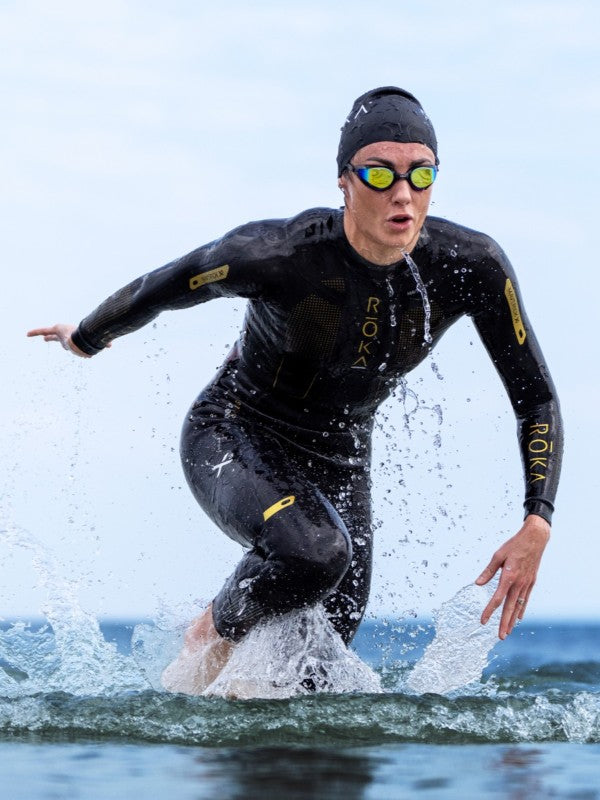
In the water, you’re on a totally different axis, not with gravity pulling your arms down, but reaching as far as you can. (Think: You’re standing on the y axis, swimming on the x axis.) So in Kurt and Rob’s drawings, they patterned the suits with the arms up.
This became ROKA’s patented ARMS-UP construction.
Drawing the world’s fastest wetsuit is one thing. Making it is another. Very quickly, the world’s best wetsuit factories told them the suits were too intricate, too complicated. It simply couldn’t be done.
Getting it Made + Tested
A thing to know about neoprene: It can stretch forever.

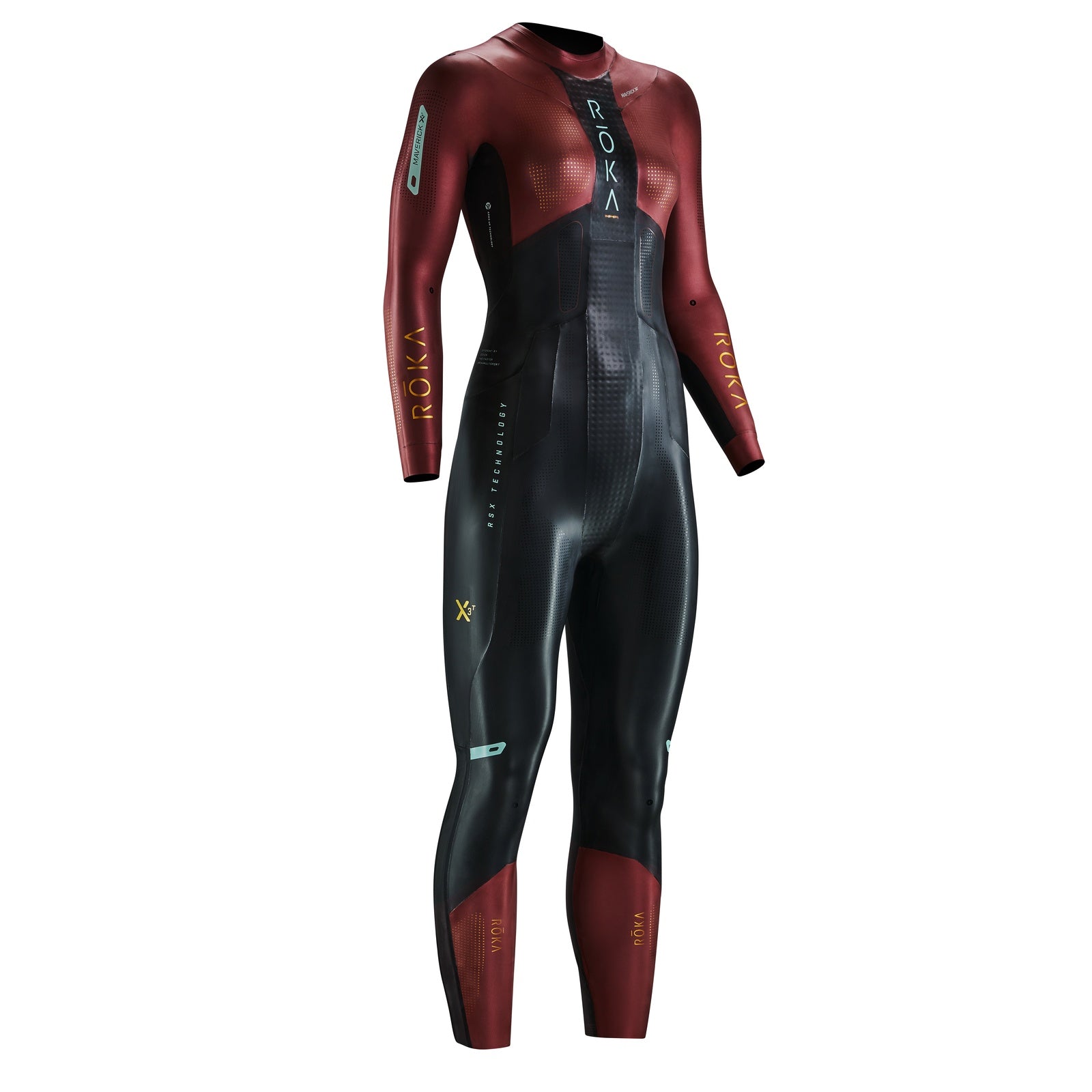
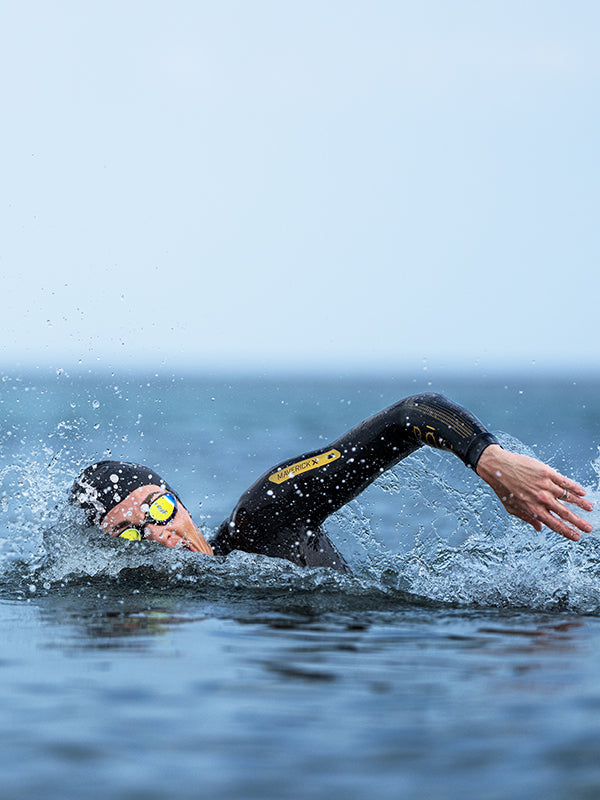
You can get the cream of the crop, smooth limestone neo, like ROKA does, in multiple thicknesses. But it will stretch like bubblegum on a hot day until it’s laminated to a liner. The ROKA magic lies in this innovative fusing of neoprene thicknesses and liners made to stretch more in certain directions, and less in others, to make you a better freestyle swimmer.
Kurt and Rob convinced the manufacturers to prototype their wetsuit anyway. They went through prototype after prototype, tweaking with each new suit, until ultimately, they’d created a masterpiece: a suit with the right buoyancy profile and differential, and built-in downhill body position. It was better than anything else on the market.

Then Kurt and Rob invented a testing protocol that involved swallowing a pill to track core temperature. They swam multiple 800s while also measuring heart rate, and blind speed.
“I was nearly a minute faster in our suit than in the most expensive suit on the market,” Kurt says. “And I had the same heart rate and lower core temperature in our suit.”
They knew what they had was game changing.
They recruited Stanford teammates to try their suit, including Michael O’Neil, a fellow All-American swimmer turned pro triathlete, and Michael's former college roommate and Stanford track star, Jesse Thomas, who'd also become a pro triathlete. They all agreed: This. Was. It.
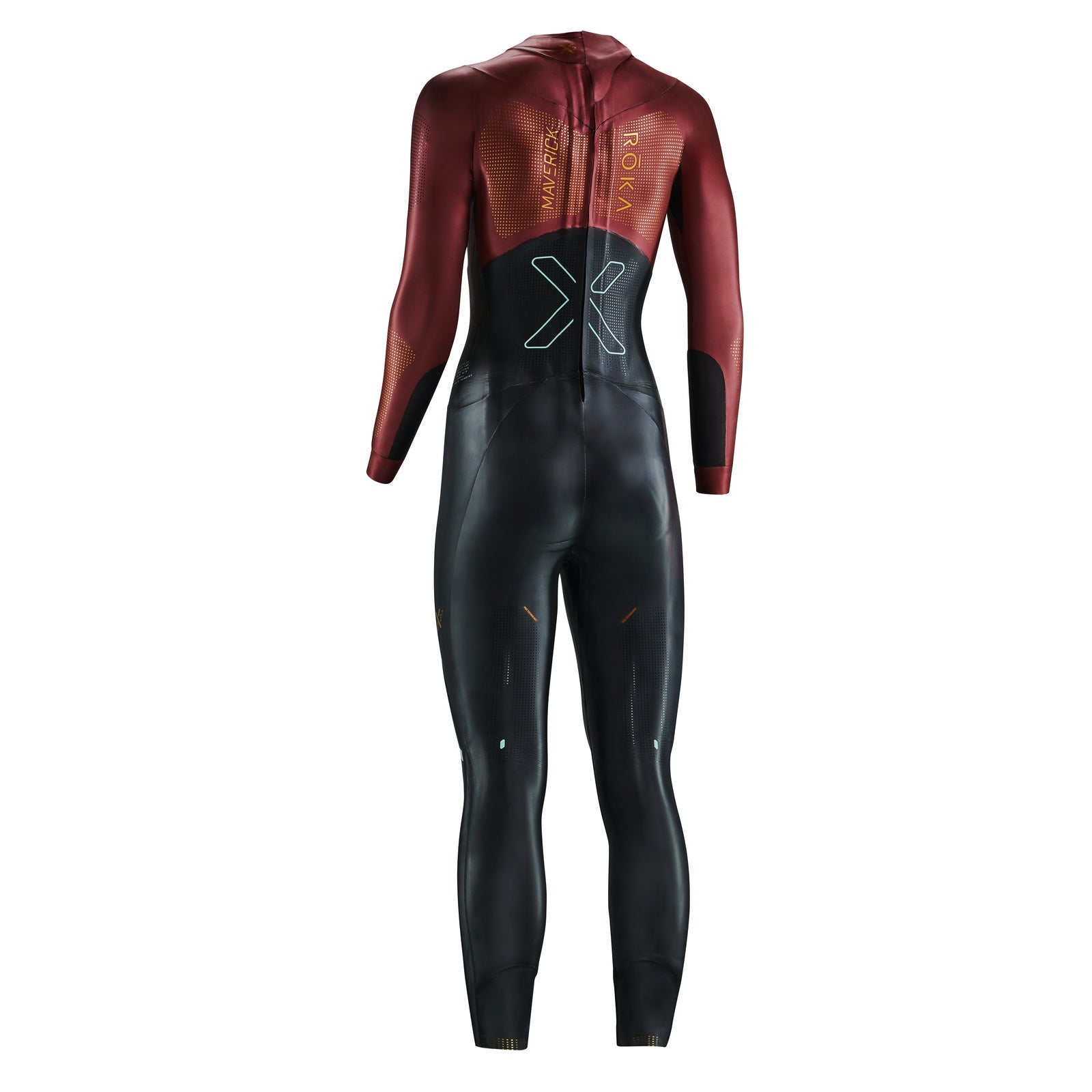
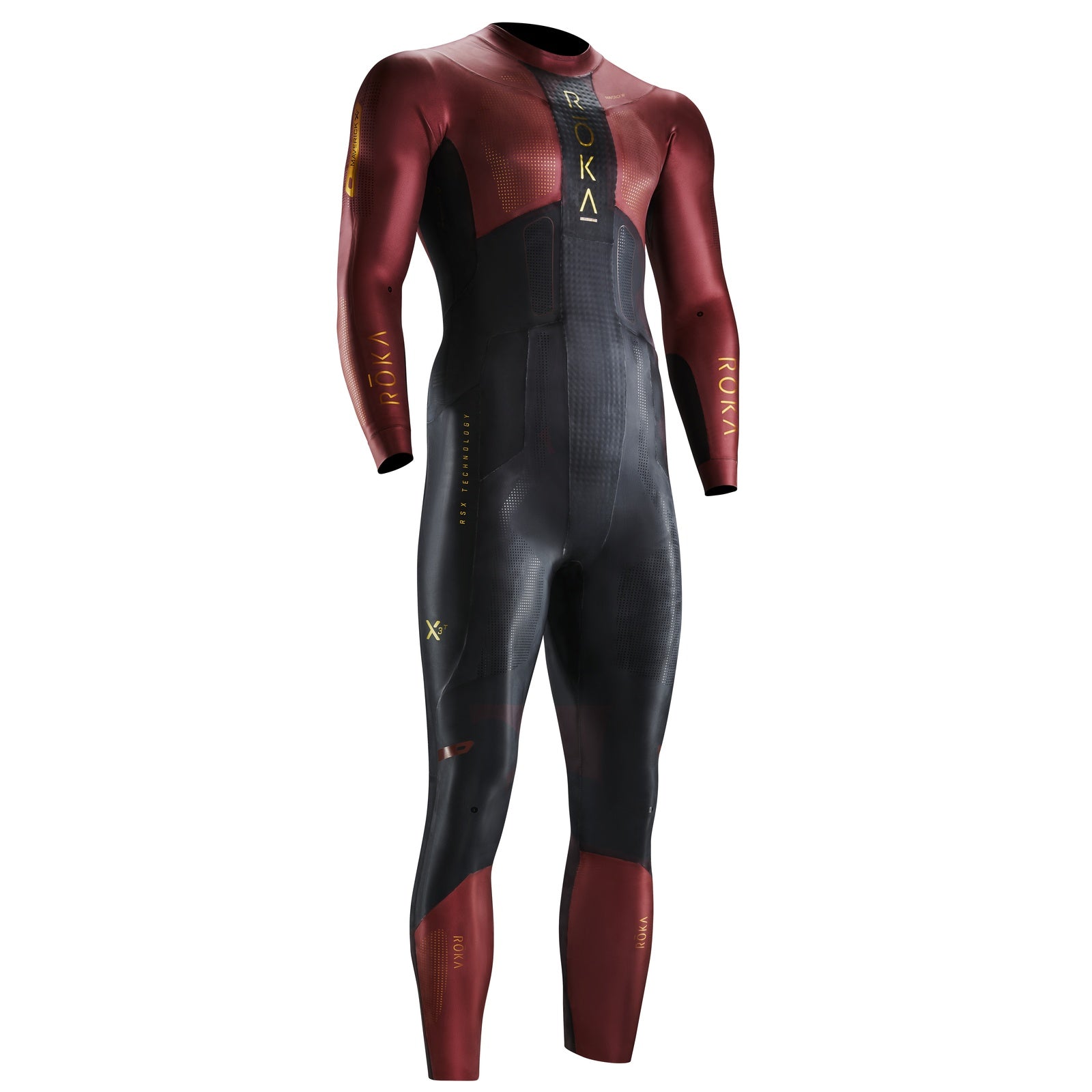
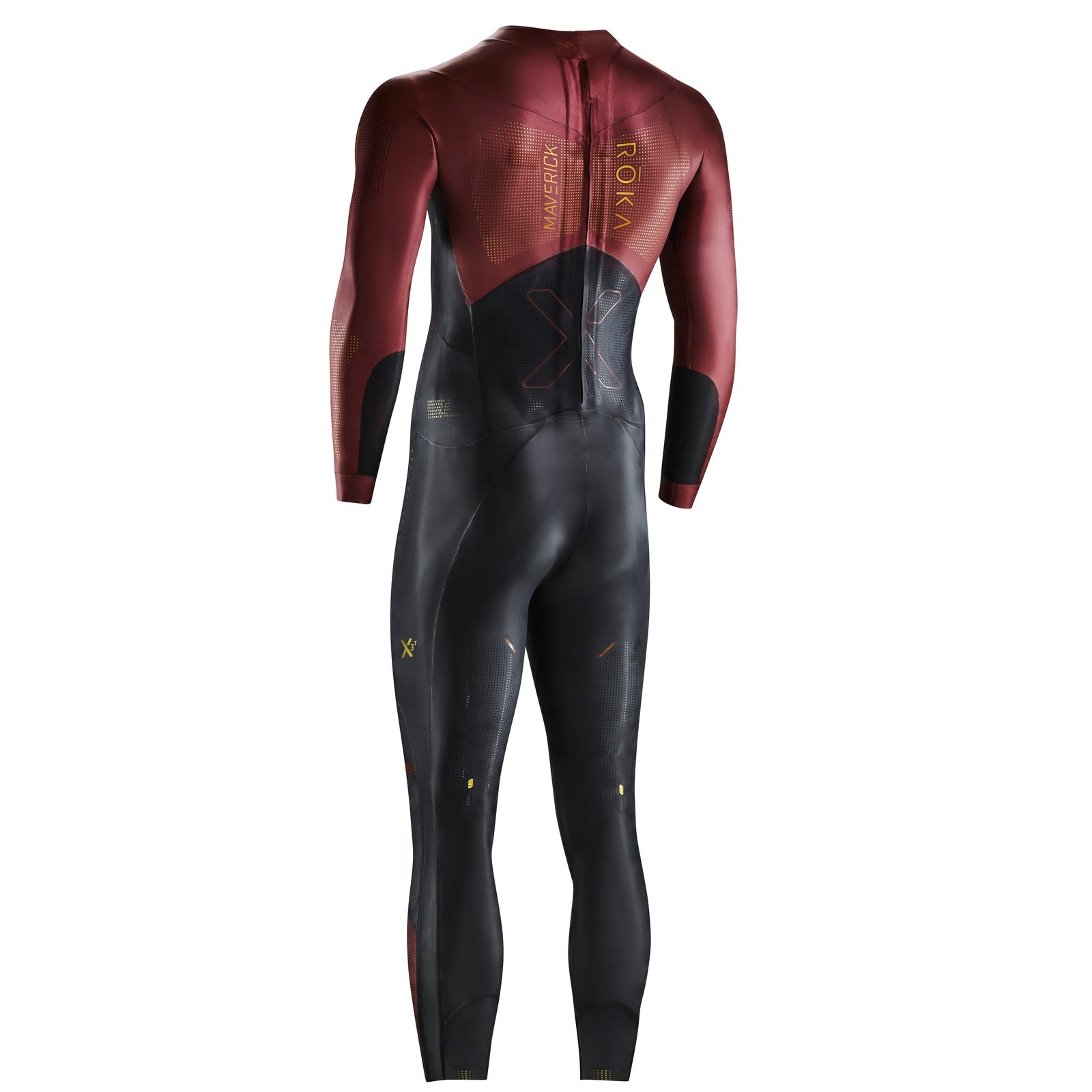
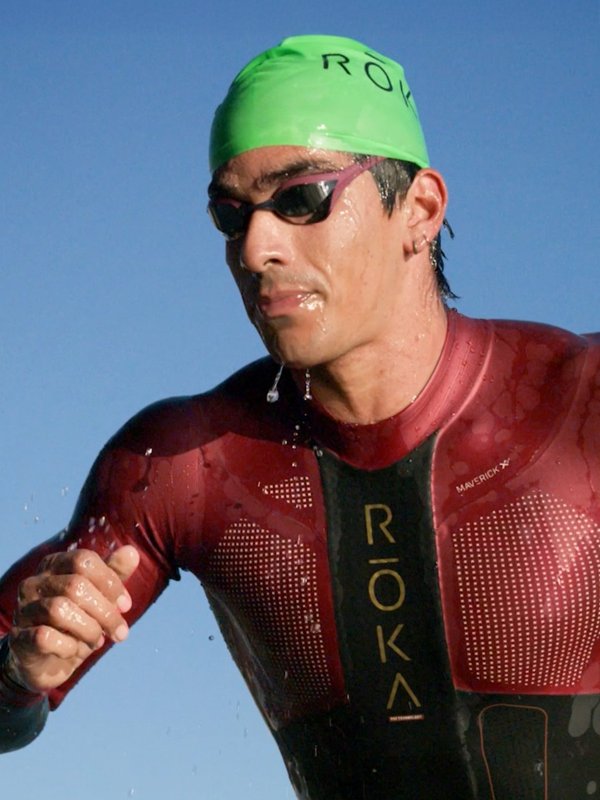
ROKA officially launched with that first wetsuit, the Maverick Pro, in March of 2013. And the rest, as they say, is history.
Forever Innovating + Pushing Boundaries
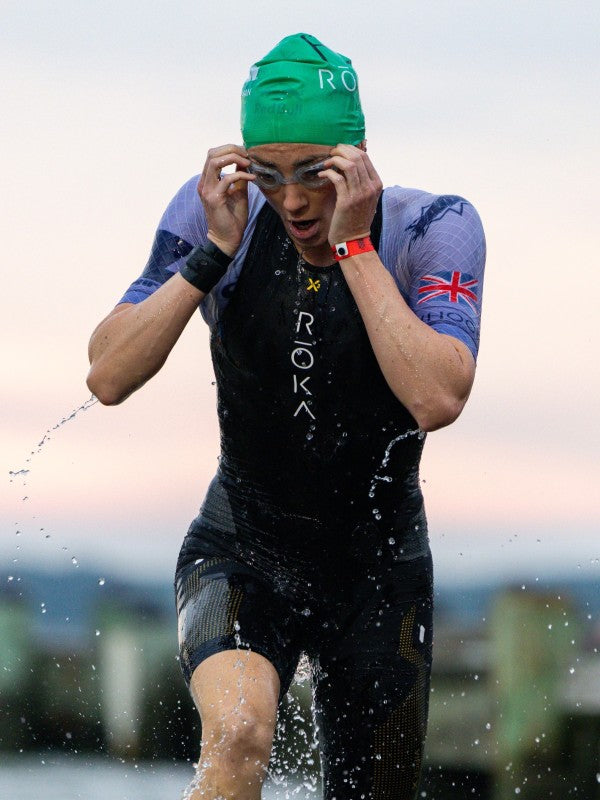
Today, Kurt and Rob, along with Michael, and a team of the world's best athletes and innovators, continue to push boundaries at the highest level of sport. From the world’s fastest swimskins and goggles, to groundbreaking SIM shorts and beyond, ROKA is always one stroke ahead, setting the standard in high-performance gear.
Check out the timeline up top for major milestones in ROKA’s revolutionary history, then grab gear designed to help you crush your next PR.