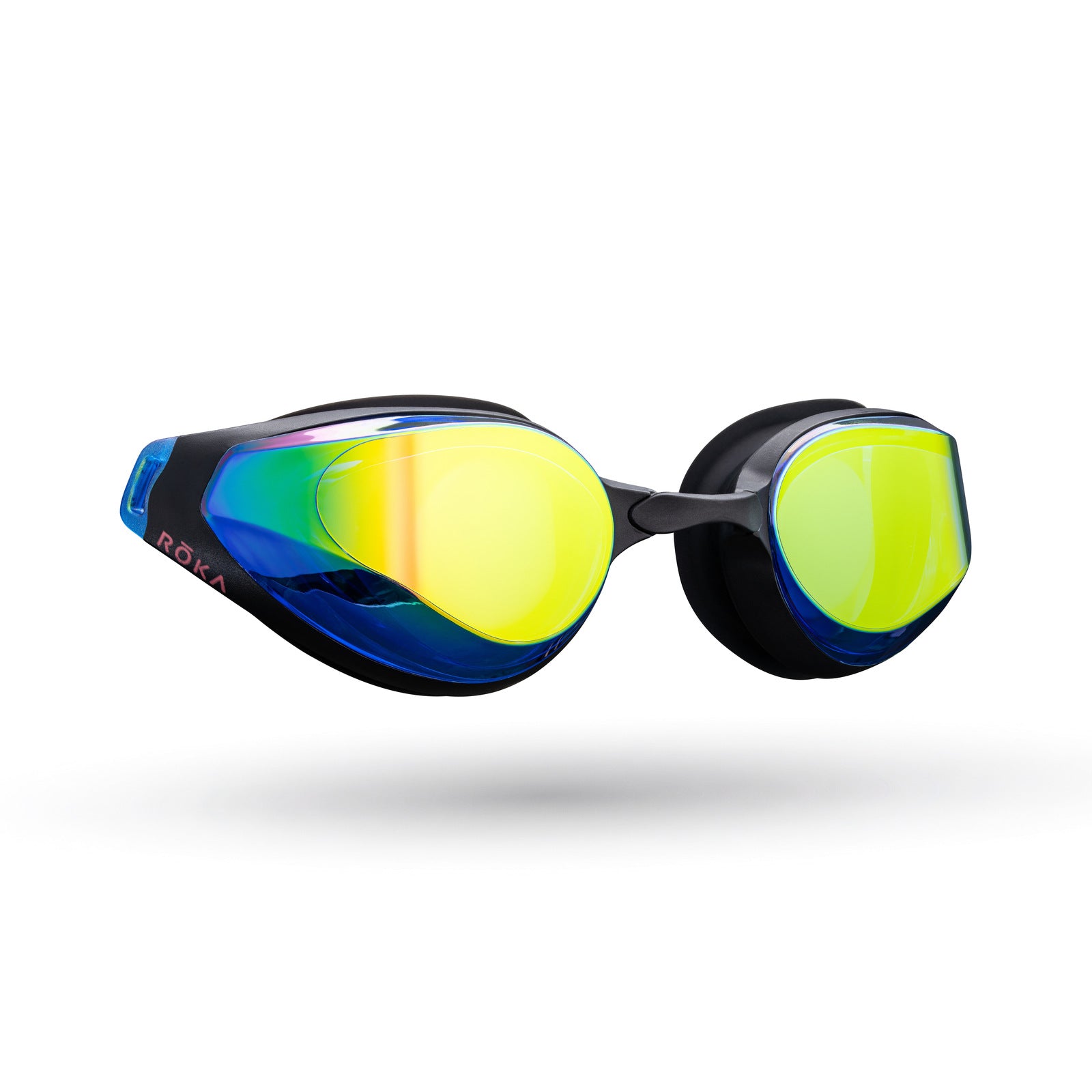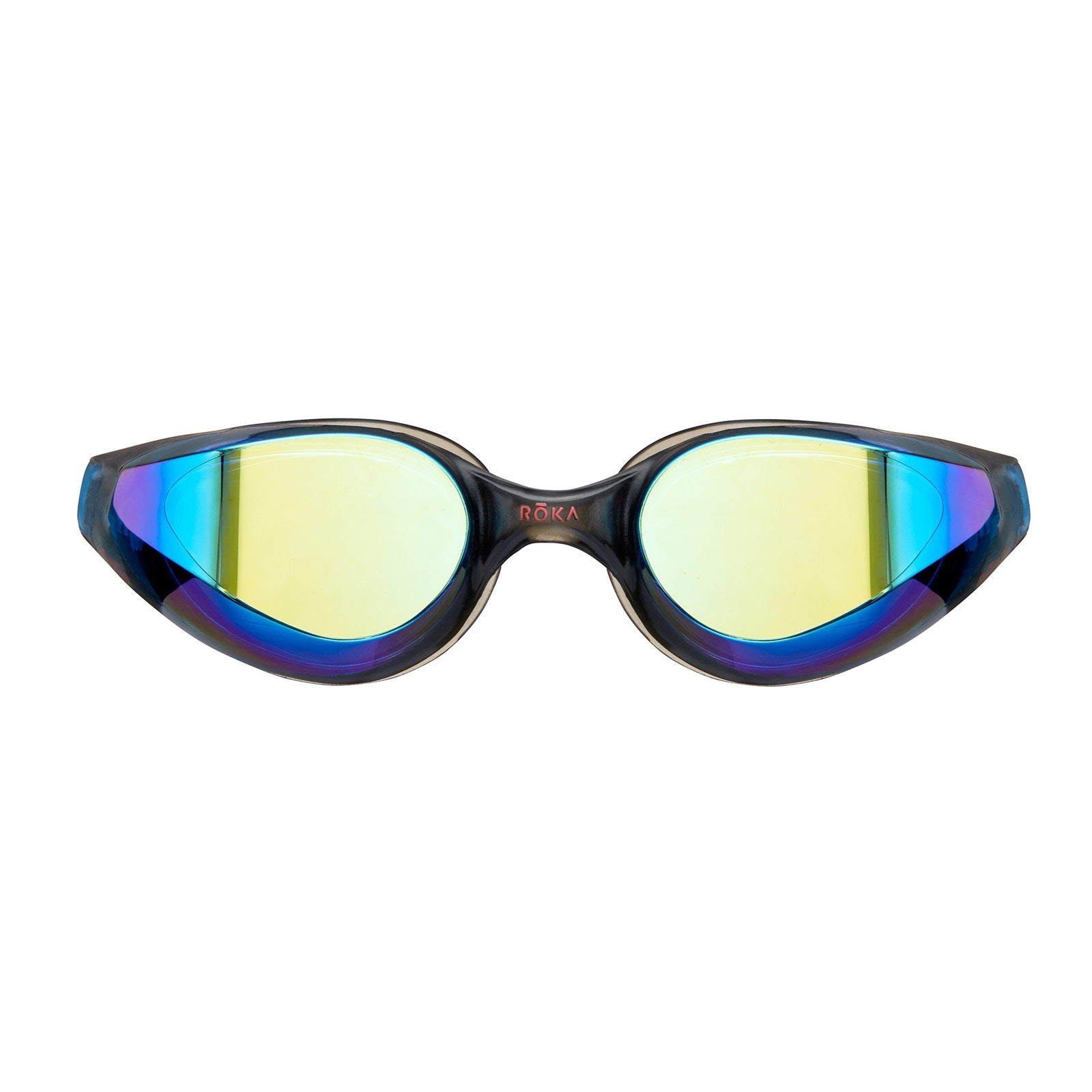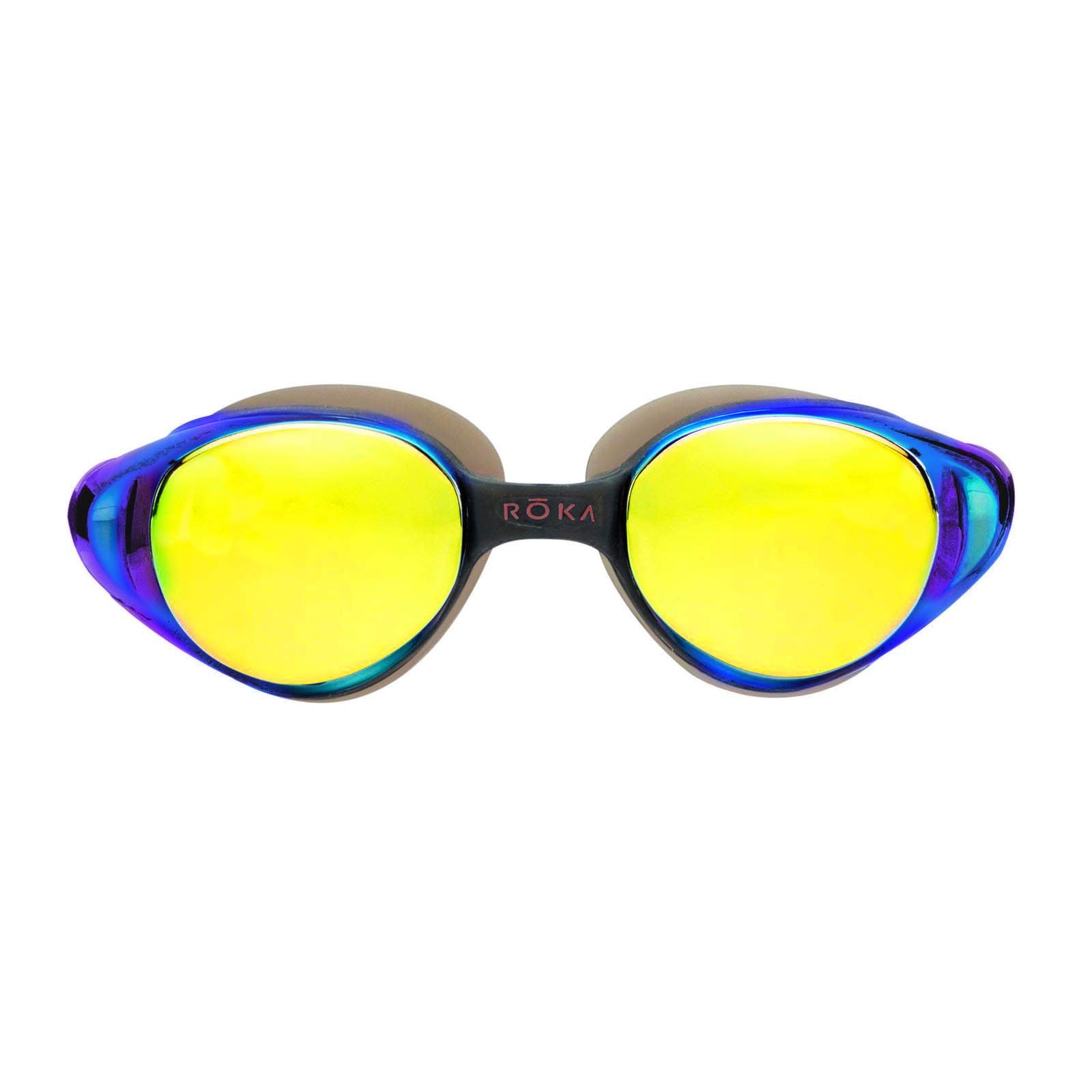






















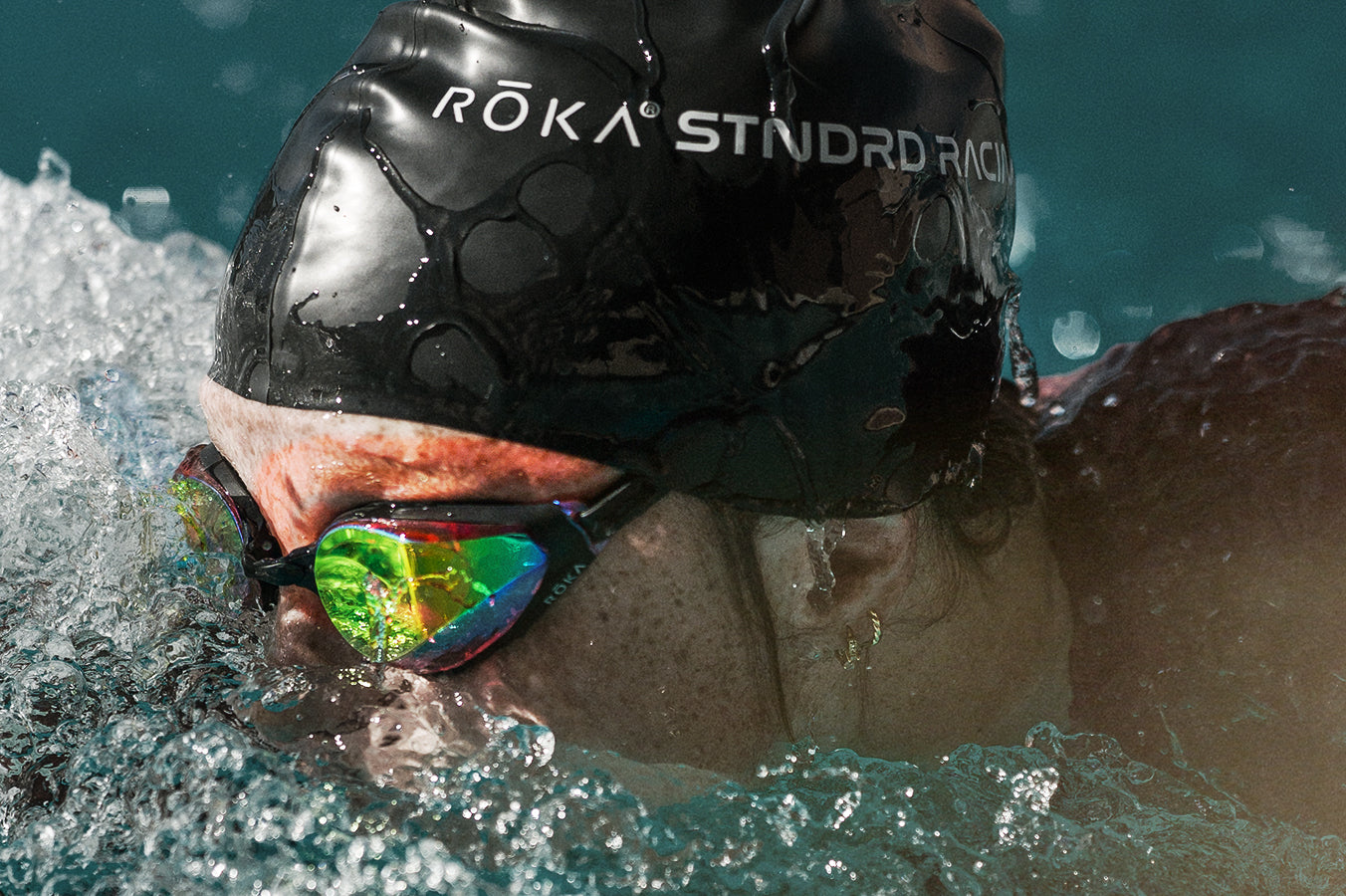

The Ultimate Triathlon Goggle
In 2015, swim goggles were pretty basic. Essential, but basic. Their main duties: let swimmers see the black line, protect the eyes, don’t fall off. Find a pair that fits your face, replace them when they start to leak.
The next big thing, at the time, was enhanced peripheral vision: See the environment and your opponents on either side! But to ROKA founders and former Stanford All-American swimmers, Rob Canales and Kurt Spenser, side-eyeing wasn’t the goal. Left-right vision wasn’t the problem.
They were obsessed with speed, and sighting fast in open water. They wanted to see what was in front of them, what’s coming, buoys and feet to draft off—all without breaking form. They wanted a better field of view, not just a wider one.
They’d already revolutionized wetsuits with the Maverick and its patented designs. They’d also obsessed over optics to prepare to launch ROKA’s first line of sunglasses, the Phantom aviators. They were experts in hydrodynamics, lenses, and tints for peak performance in all conditions; the knowledge was there to make something extraordinary.
But they still weren’t satisfied with the goggles marketed to triathletes.
Kurt and Rob wanted the ultimate triathlon goggle for racing, training, and open water.
They’d nailed comfort and anti-fog with the X1, an oversized, bombproof goggle with a huge field of view. The fit is more scuba than pool goggle—a fantastic experience for swimmers who prize comfort and visibility. And the volume helps minimize fogging. But it’s not optimized for hydrodynamics.
Then Rob put on a pair of goggles upside-down and had a holy sh*t moment.
He was stoked, staring at Kurt with the upside-down goggles on. “This is way better!”
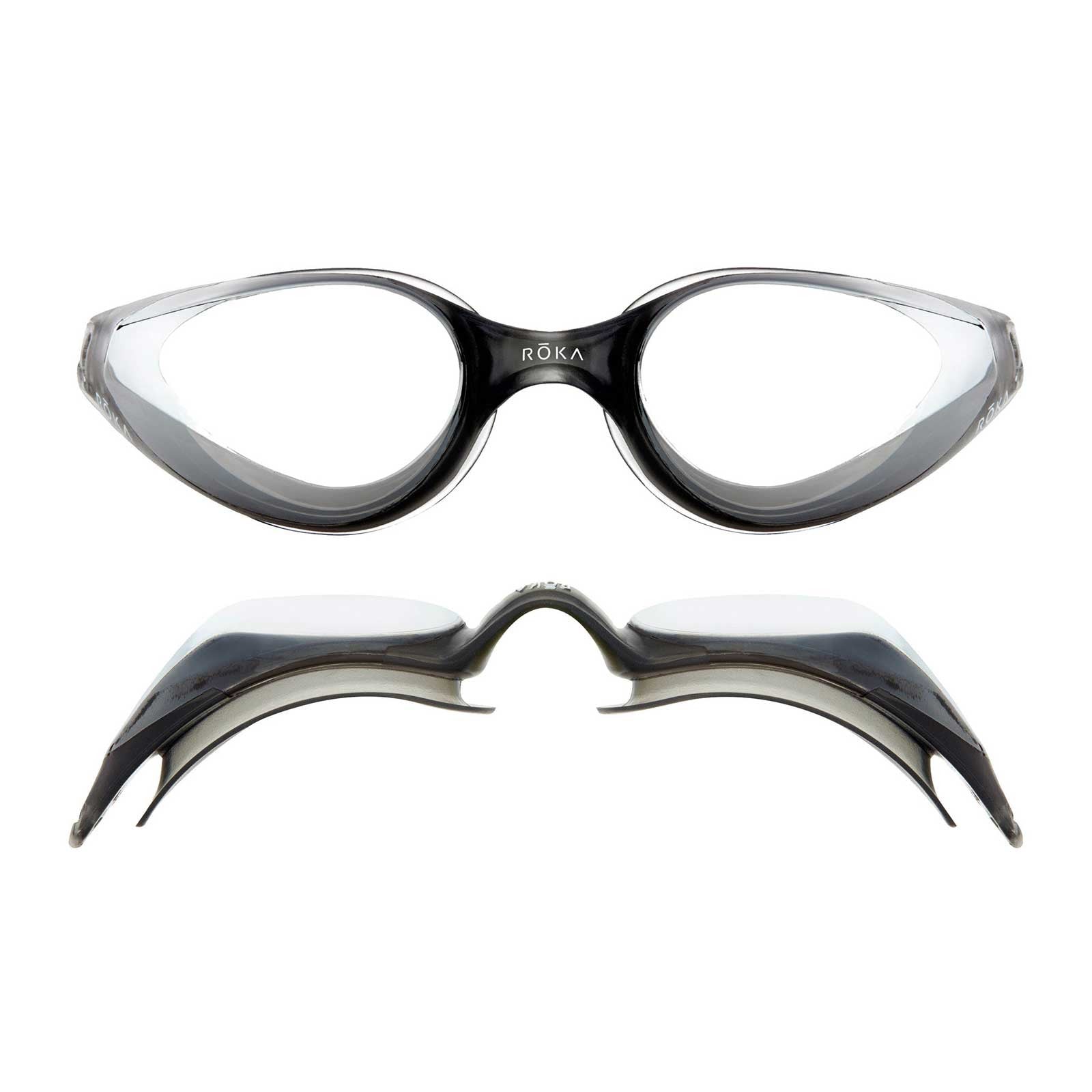
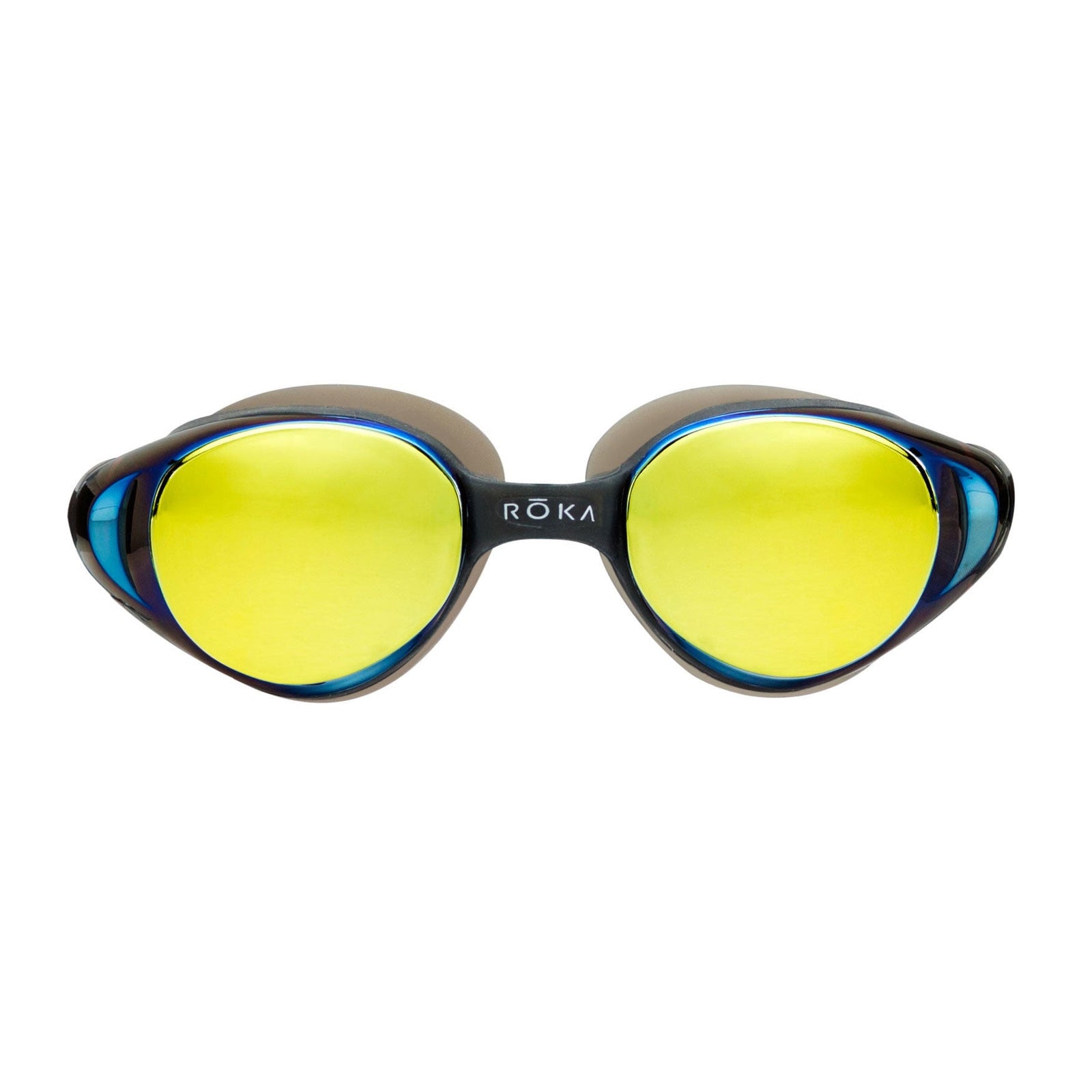
By turning the design paradigm literally on its head, Kurt and Rob realized they could open up the lens at the top if they slanted it at a retroscopic angle—tilted toward the brow. Do that, and they’d unlock the entire field of view.
Then came the engineering. They had to find the perfect angle for maximum visibility, and figure out how to shape the lens for crisp vision—no distortion, warps, or artifacts. The available goggles that touted better peripheral view drove Kurt crazy: looking through them was like looking through a funhouse mirror. The triathlon swim can be disorienting as it is. They absolutely could not settle for that.
As for fogging, that’s a physics and thermodynamics game. No matter how good the anti-fog coating, there’s heat, sweat, and tears coming off the face. Then athletes jump into cold water, and that temperature differential drives condensation. Anti-fog is an antidote, not a cure. A larger interior volume helps. That’s why the X1 is so good at fighting fog. Could they increase interior volume while keeping the goggle lean and mean?
Like the X1, the ultimate goggle also had to be bombproof.
You don’t want anything to break on race day. You’re in the chute, you’re waiting for a while to go. If something goes wrong, nobody can just toss you an extra pair. Your goggles are all you got.
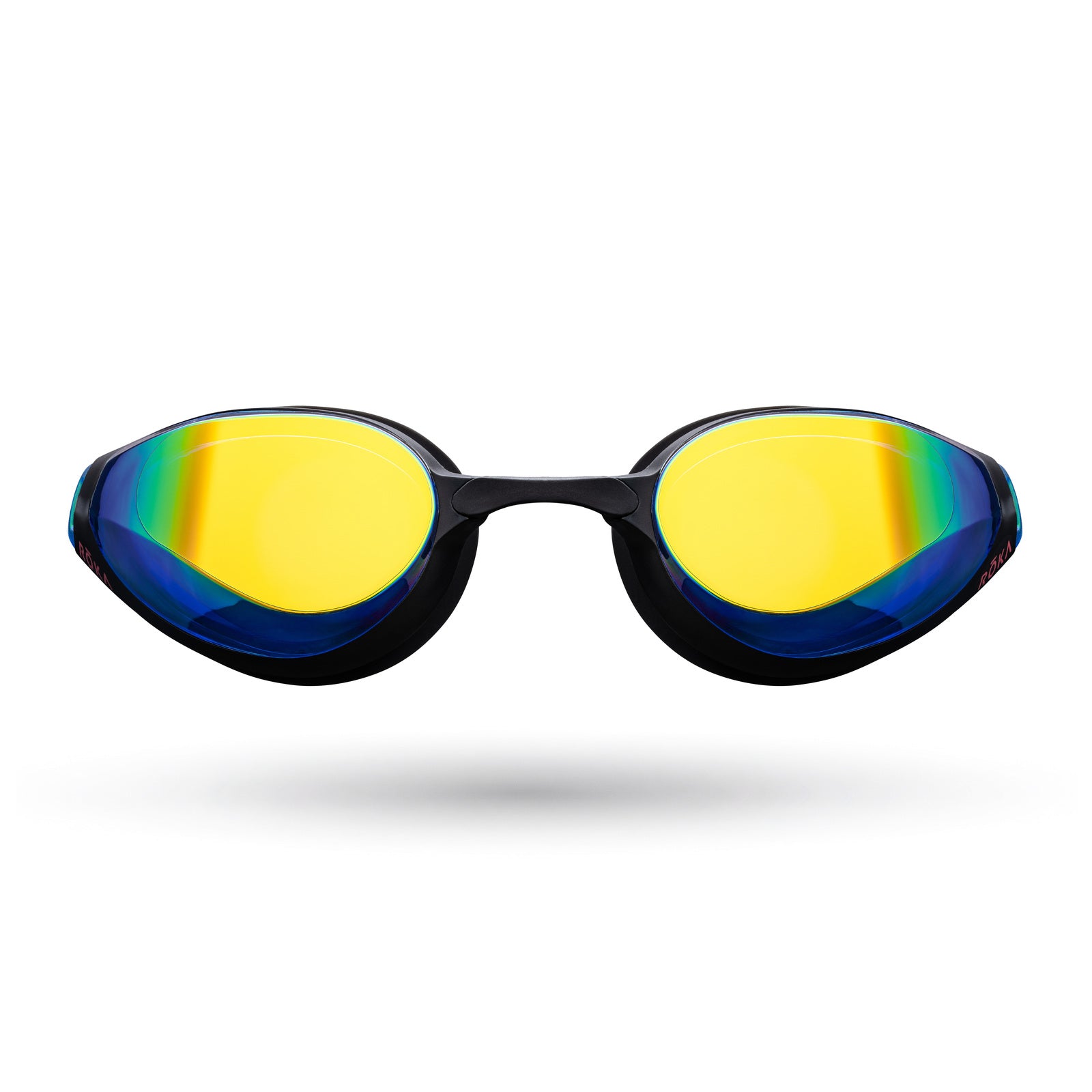
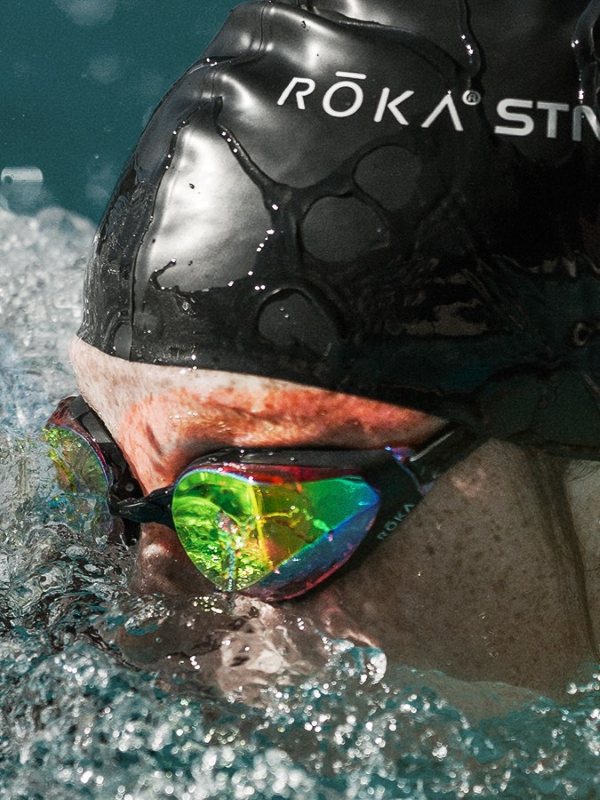
— Kurt Spenser / Co-FounderAfter months of tinkering and testing, they engineered the lens shape that became the revolutionary R1 goggle. They patented an 11-degree tilt—the ideal for maximum forward vision—known as Rapidsight™, making ROKA the only company in the world that can offer it. That tilt also made the goggle hydrodynamic (super fast) while maintaining volume (fog fighting).

Putting the new goggle on in open water for the first time was an incredible feeling.
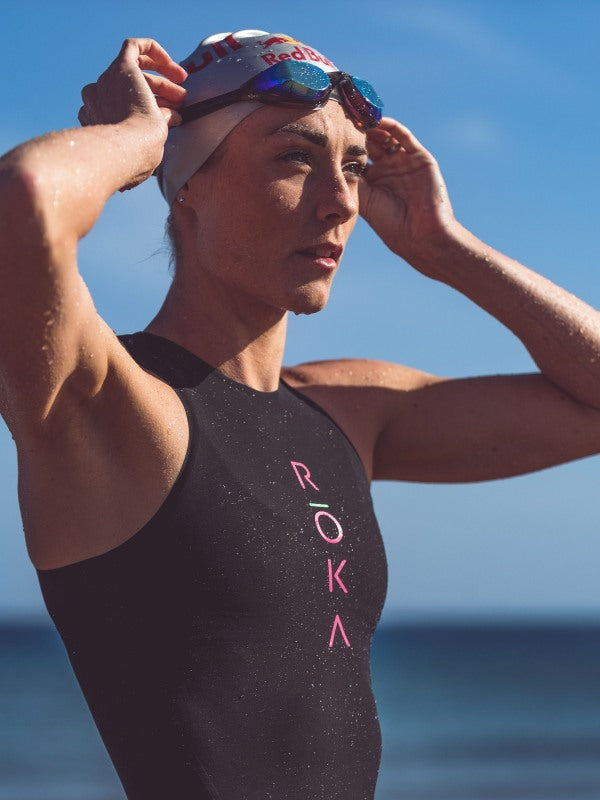
Kurt wasn’t the only one who felt that way. The R1 was a hit among swimmers of all types. Rapidsight, paired with ROKA’s SPCTRM optics—six lens colors designed to make buoys pop in any light conditions—made the R1 a sensation.
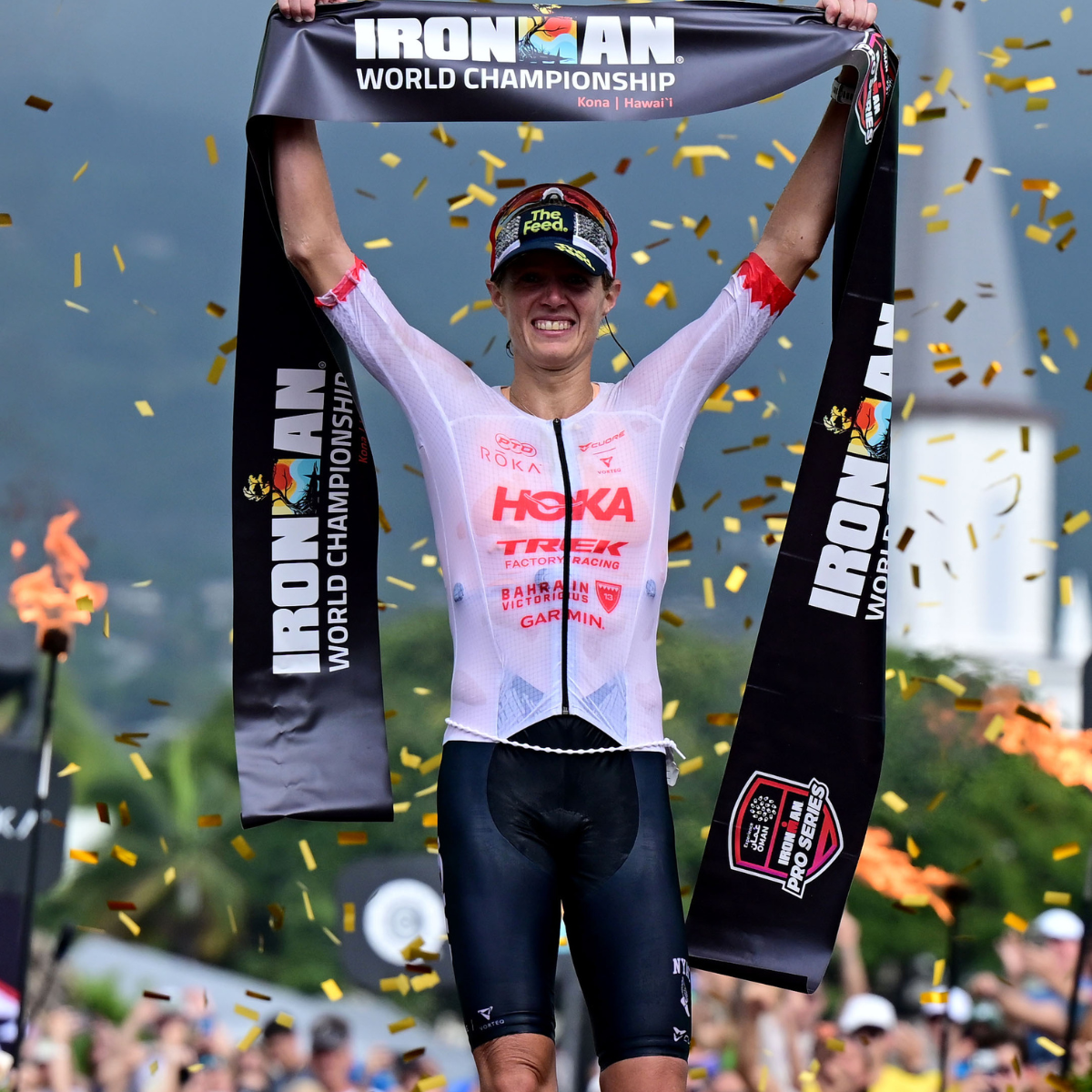
It was written up in The Wall Street Journal, and received a prestigious Red Dot product design award. It quickly became the go-to for the world’s best athletes, including IRONMAN World Champion Lucy Charles-Barclay.
Having the right equipment—even in something as small as a goggle—can make such a massive change in how you feel, how you perform, how often you want to get out there and get after it. That’s why we do what we do.
— Kurt Spenser / Co-Founder
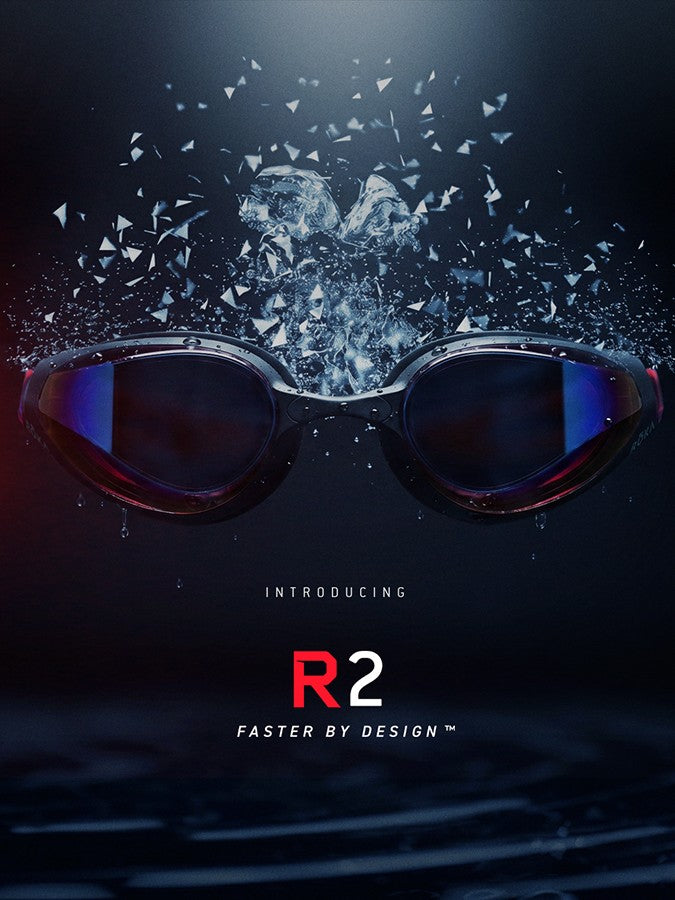
The R1 changed the game. But the mission to #findfaster never stops.
Where the unibody R1 fit maybe 80 percent of faces, Kurt and Rob wanted more people to be able to experience Rapidsight—they wanted it to work for everyone. They wanted the R1 to be more durable. More comfortable. More customizable. And more anti-fog.
One thing about ROKA: it’s not a fashion brand. The team builds tools. Essential gear that helps athletes unlock their full potential. Do those tools look rad, too? Yes. But they’re not going to build something unless it’s the best. That’s why they spent nearly a decade working to improve the R1 and make the R2.
Over the past decade, technology and manufacturing processes caught up to their demands for the next evolution of the R1. Now, it’s finally here.

Three Upgrades. One Mission.
Nano Coating
The most advanced anti-fog coating we’ve ever shipped. Keeps the lens clear and sight lines undistracted, race after race.
Silicone Gaskets
Premium silicone in the eye gaskets and head strap, translating to a more comfortable and flexible fit. Notched anti-slip grooves keep the R2 locked in—no slip.
Nose Bridges
S / M / MT / L. Each R2 comes with four sizes that click firmly into place for a custom, dependable fit. Start with Medium; swap as needed.
The spec on this was: build the ultimate swim, triathlon, and open-water race goggle—for everyone.
— Kurt Spenser / Co-FounderAccomplished.